
VELAMMAL COLLEGE OF ENGINEERING & TECHNOLOGY
(Autonomous)
NBA Accredited, NAAC Accredited with 'A' Grade
(Autonomous)
NBA Accredited, NAAC Accredited with 'A' Grade
List of Laboratories
1. Engineering Practice Laboratory
2. Electric Circuits Laboratory
3. Electrical Machines Laboratory
4. Power System Simulation Laboratory
5. Control Systems Laboratory
6. Measurements & Instrumentation Laboratory
7. Power Electronics & Drives Laboratory
8. Linear Integrated Circuits Laboratory
9. Research & Development/ TI Innovation Laboratory
10. Renewable Energy Systems Laboratory
11. Centre of Excellence - Electrical Drives System and Electric Vehicle Laboratory
12. Project Laboratory
1. Engineering Practice Laboratory
The Engineering Practices Laboratory is a foundational lab offered in the first year of engineering programs. It introduces students to basic engineering tools, instruments, manufacturing processes, and safety practices. The lab helps students develop essential technical skills that are required across all engineering disciplines. The lab familiarizes students with common engineering hand tools and power tools and provides hands-on experience in basic fabrication, assembly, wiring, and measurement. Total Investment cost: Rs.2,15,454.00
2. Electric Circuits Laboratory
The Electric Circuits Laboratory is a fundamental component of the undergraduate Electrical Engineering program. This laboratory enables students to apply theoretical concepts of electrical circuits into practice, helping them understand the behaviour of electrical components and the analysis techniques used in real-world scenarios. By conducting various experiments with resistors, capacitors, inductors, and other basic electrical components, students develop a deeper understanding of circuit analysis, network theorems, and the principles of electrical systems. Total Investment cost: Rs.6,66,534.00
3. Electrical Machines Laboratory
The Electrical Machines Laboratory introduces students to the construction, operation, and characteristics of DC and AC machines. It provides hands-on experience with generators, motors, transformers, and various machine testing methods. Students learn to determine efficiency, regulation, torque–speed characteristics, and losses of electrical machines. Experiments include OC and SC tests, load tests, brake tests, and speed control techniques. The lab helps students understand the performance of DC shunt, series, compound motors, and generators. AC machine studies cover induction motors, synchronous machines, alternators, and synchronous motors. Students practice safe operating procedures and proper electrical wiring methods. The lab enhances skills in recording, analyzing, and interpreting machine performance data. Modern measuring instruments and setups provide accurate and realistic learning experiences. Overall, the lab strengthens foundational knowledge in electrical energy conversion and prepares students for industrial applications. Total Investment cost: Rs.23,88,688.00
4. Power System Simulation Laboratory
A Power System Simulation Lab is an essential component of the curriculum for Electrical and Electronics Engineering (EEE) students, particularly those specializing in power systems. It provides students with practical experience in understanding and analyzing the behavior of electrical power networks and their various components under different operating conditions. By utilizing advanced simulation tools, students can replicate real-world power system scenarios, which helps in bridging the gap between theoretical concepts and practical applications. The Key Features and Tools in the Lab includes MATLAB/Simulink which is used for simulating dynamic systems and power flow analysis. PSCAD (Power Systems Computer-Aided Design) A simulation tool for analyzing electromagnetic transients in power systems. DIgSILENT PowerFactory which is a comprehensive power system analysis tool for load flow, short-circuit analysis, and stability studies. ETAP (Electrical Transient Analyzer Program): A real-time simulation software for power system modeling, analysis, and optimization. PSS/E (Power System Simulator for Engineering): A popular tool for power flow, stability, and dynamic simulation. Total Investment cost: Rs.56,56,853.00
5. Control Systems Laboratory
The control system lab provides practical, hands-on experience with control theory principles taught in the classroom. It allows students to model, analyze, and design control systems using both hardware and software also it helps the student understand open-loop and closed-loop control, stability, time-domain and frequency-domain behavior, and the effect of different controllers (P, PI, PID, compensators). It implements real control systems on physical hardware (motors, servos, plant emulators) and compare theoretical/simulated results with actual behavior. It develops students’ ability to use modern software tools (e.g., MATLAB, LabVIEW) for control system analysis. Total Investment cost: Rs. 5,25,300.00
6. Measurements & Instrumentation Laboratory
The Measurements & Instrumentation Laboratory introduces students to the principles of electrical and electronic measurements. It provides hands-on experience with essential instruments such as voltmeters, ammeters, wattmeters, and oscilloscopes. Students learn the proper methods of instrument connection, calibration, and error minimization. The lab helps in understanding measurement standards, accuracy, precision, and uncertainty analysis. Experiments focus on measuring electrical parameters like voltage, current, power, resistance, inductance, and capacitance. Students also explore transducers for measuring physical quantities such as temperature, displacement, and pressure. The lab enhances skills in data acquisition using both analog and digital instruments. It introduces modern measurement systems and sensors used in industrial applications. Total Investment cost: Rs.5,42,193.00
7. Power Electronics & Drives Laboratory
The Power Electronics & Drives Lab is an essential part of the Electrical and Electronics Engineering (EEE) curriculum. It provides students with practical exposure to electronic devices and circuits that control and convert electrical power. Power electronics is a rapidly growing field with applications in renewable energy systems, electric vehicles, motor drives, power supplies, automation, and modern industrial equipment. This lab helps students understand the behavior, characteristics, and applications of power electronic devices through hands-on experiments and real-time analysis. Total Investment cost: Rs.18,29,177.40
8. Linear Integrated Circuits Laboratory
The Linear Integrated Circuits Laboratory introduces students to the practical applications of analog ICs. It provides hands-on experience with operational amplifiers and their fundamental configurations. Students perform experiments on amplifiers, oscillators, filters, and waveform generators. The lab helps learners understand the characteristics, limitations, and real-world behavior of IC circuits. Experiments focus on designing and testing analog building blocks like adders, comparators, integrators, and differentiators. Students use simulation tools along with hardware implementation to verify circuit performance. The lab enhances knowledge of linear IC specifications and datasheet interpretation. Overall, the lab builds strong foundational skills for analog electronics design and applications. Total Investment cost: Rs.4,04,870.00
9. Research & Development/ TI Innovation Laboratory
Research laboratory is a specialized space designed for the practical investigation, experimentation, and advancement of topics related to electrical engineering. enable hands-on learning and research in areas such as power systems, electrical machines, circuit analysis, and control systems. Simulation stations for electric circuits, control system trainers, and software platforms of MATLAB, LabVIEW and PSIM for automation tasks. PG and UG students are doing their project work regularly in the Research laboratory. Simulation of custom power devices have been carried out and analyzed for different power quality disturbance conditions like voltage disturbances, Voltage Sag and Swell using MATLAB/ SIMULINK software. Simulation of custom power devices Distributed STATic COMpensator (D-STATCOM and Distributed Voltage Regulator (DVR) have been carried out and analyzed with the inclusion of wind power generation for different wind speed conditions. Application of evolutionary techniques Genetic Algorithm and fuzzy logic based techniques for DSTATCOM and DVR improves the system power quality. A control methodology based on DSP processor has been carried out for real time simulation. Total Investment cost: Rs. 22,84,000.00
10. Renewable Energy Systems Laboratory
The Renewable Energy Systems Laboratory is designed to provide hands-on experience in the study, design, analysis, and testing of various renewable energy technologies. This lab enables students to understand the principles of energy conversion from natural and sustainable sources such as solar, wind, biomass, hydro, and fuel cells. It also helps students develop practical skills necessary for real-world applications in modern energy systems and smart grids. Modern monitoring tools and data acquisition systems are used for real-time analysis. Students gain practical skills to design and test small-scale renewable energy prototypes. Overall, the lab builds awareness and technical competence in clean and sustainable energy technologies. Total Investment cost: Rs. 12,50,000.00
11. Centre of Excellence - Electrical Drives System and Electric Vehicle Laboratory
The Centre of Excellence in Electrical Drives System and Electric Vehicle Laboratory provides an advanced platform for research and training in modern electric mobility. It is equipped with state-of-the-art motor drives, power converters, EV controllers, and battery management systems. Students learn the fundamentals of electric vehicle architecture, propulsion systems, and energy storage technologies. The lab enables hands-on experience with BLDC, PMSM, and induction motor drive systems. Real-time simulators and testing setups help analyze drive performance, efficiency, and control strategies. The facility supports prototype development, modeling, and validation of EV subsystems. It encourages innovation and interdisciplinary projects in sustainable transportation and advanced drive technologies. Overall, the centre enhances industry-ready skills and research capabilities in electric drives and electric vehicles. Total Investment cost: Rs. 66,03,173.00
12. Project Laboratory
The Project Laboratory provides a dedicated space for students to design, develop, and implement innovative engineering projects. It encourages creativity, problem-solving, and practical application of theoretical concepts. UG students use the lab to build mini-projects and final-year projects across various domains. PG students utilize the facility for advanced system design, research-oriented projects, and prototype development. The lab is equipped with more than necessary space for utilizing computing resources, development boards, testing instruments, and fabrication tools. Students learn project planning, documentation, teamwork, and technical presentation skills. The environment promotes interdisciplinary collaboration among students from different specializations. Regular reviews, mentoring sessions, and technical guidance enhance project quality. The lab also supports industry-based and problem-driven projects aligned with current technologies. Overall, the Project Laboratory nurtures innovation, technical competency, and research culture among students.
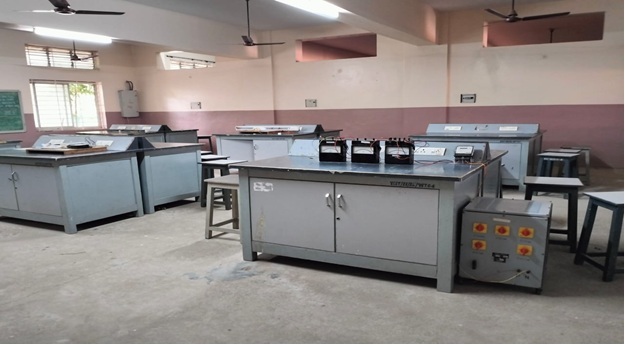
Engineering Practice Laboratory
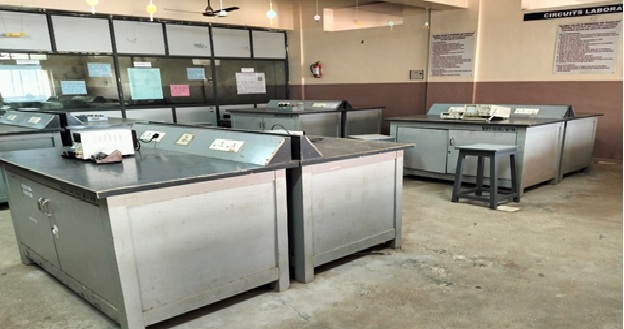
Electric Circuits Laboratory
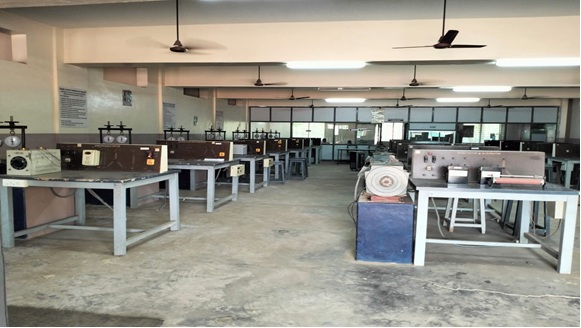
Electrical Machines Laboratory
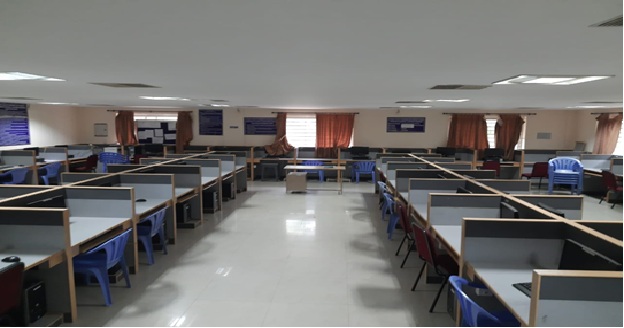
Power System Simulation Laboratory
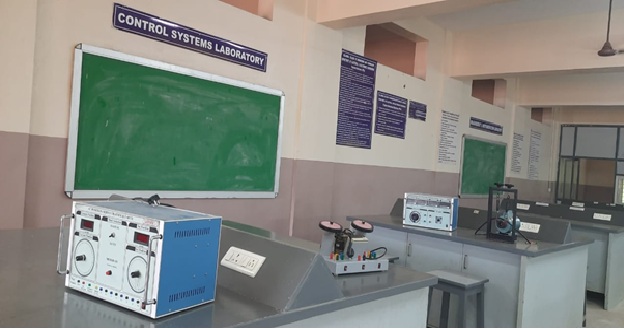
Control Systems Laboratory
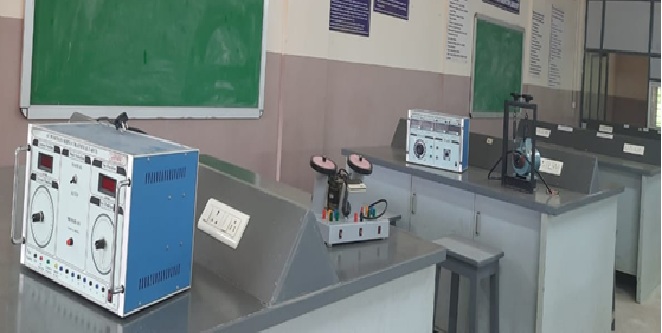
Measurements & Instrumentation Laboratory
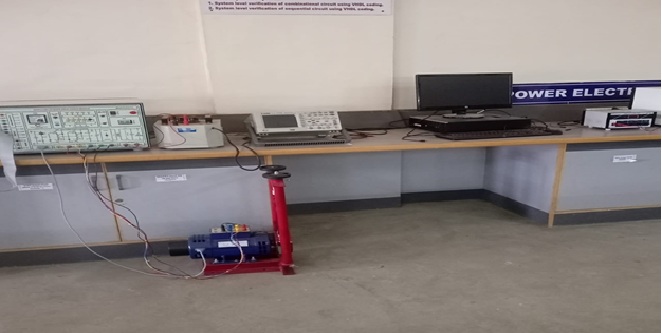
Power Electronics & Drives Laboratory
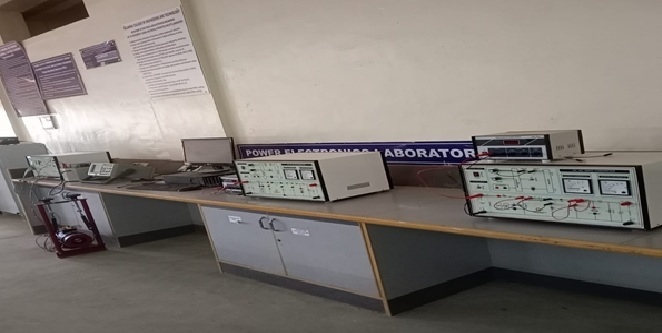
Linear Integrated Circuits Laboratory
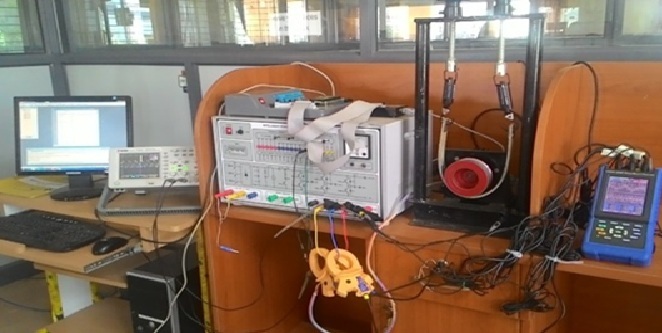
Research & Development/ TI Innovation Laboratory
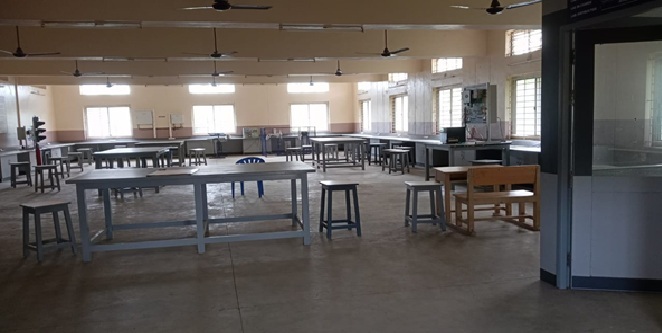
Renewable Energy Systems Laboratory
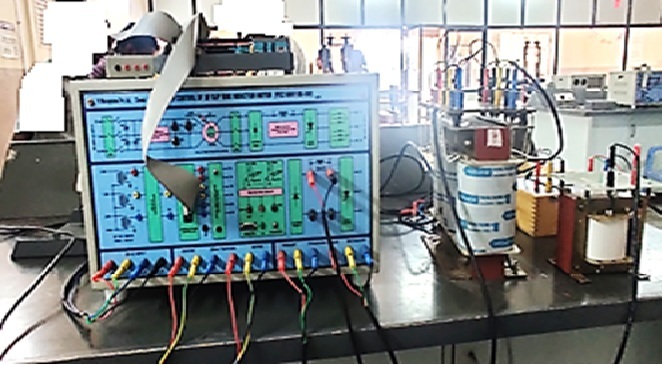
Centre of Excellence - Electrical Drives System and Electric Vehicle Laboratory
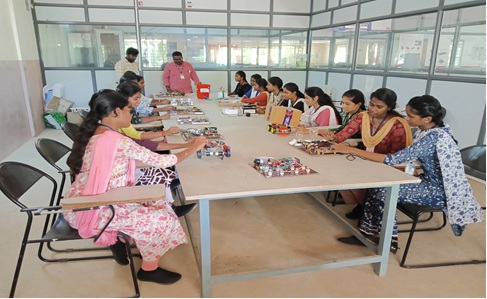
Project Laboratory